Knowing the difference determines which one to use when you link to something from your websight.
Nofollow links are hyperlinks that begin with a rel=nofollow tag.When to Use DoFollow or NoFollow Link
Saturday Share: Best Kitchen Purchase This Year
The Power of Fonts
I think all of them are free for personal use, but I want them for book covers which means I buy a commercial license or make a donation to the creator if that's what he/she wants.
The font shown above, at left, Bartleen, is really pretty, and a commercial license for Bartleen Script by Cut Story was on sale last night for only $8.00.
I didn't buy at the time because I wanted to keep looking and found myself browsing CreativeFabrica, a website with some incredible fonts.
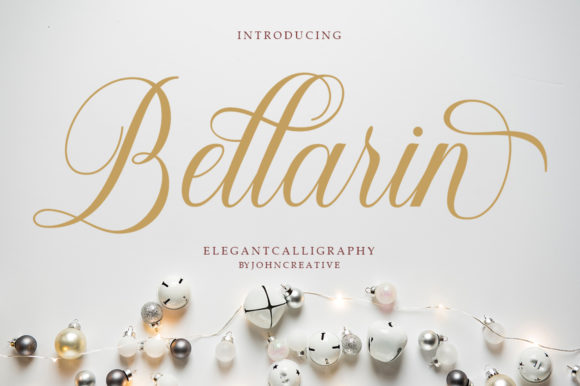
Bellarin is a free font offered by CreativeFabrica.Why Use Custom Fonts
1. Buy a custom font, or typeface as it's properly called, and you can use it so the design becomes synonymous with your brand.
2. Everyone who has a computer can recognize the standard fonts that come with Windows. Using one of those for book covers kind of shouts, "Amateur" to many people. Pick a custom font or one that's not often used.
3. Fonts can create an atmosphere or mood which means it can give a visual clue to what's "beneath" the font whether that's a book cover, website, video, movie, music album, etc.
With documents, fonts can guide the eye in reading, i.e., bold face, italics, etc. show which parts are of specific importance.
Learn more about the power of fonts with this book: Thinking with Type: A Critical Guide for Designers, Writers, Editors, & Students by Ellen Lupton.Get the print edition if you can because it's chock full of illustrations naturally, and they never really show up well in an ebook.
Takeaway Truth
Fonts, or typefaces, are more than a print element. They're another way to create an emotional response in the reader.Review: Solving the Procrastination Puzzle
I think procrastination is the challenge most people face. If you'd like to break free from this self-destructive habit, this book has specific strategies to help you do that.
The author, Dr. Timothy Pychyl is an associate professor of psychology at Carleton University in Ottawa. He's been researching and writing about procrastination for almost 30 years. He offers practical tips to help you drop procrastination like the bad habit it is.
Takeaway Truth
Take action today. Get unstuck! Get—and read—Solving the Procrastination Puzzle.
Dear Blog—I'm Back!
I was just so sick I thought I might. LOL
For the first time in my life, I was sick. I guess I've led a blessed life because other than the occasional cold or sinus infection, I've never been really sick.
Some how, somewhere during our travels at the end of May for graduations and birthday parties, I contracted—wait for it—an unknown pathogen.
It was weird. One day I was find. The next day I thought I was going to die, and that continued until mid-July.
At first I thought I had food poisoning, but after 2 weeks of being violently ill, I knew it was more than that. Lab tests followed. What I discovered is the lab has to know what you have in order to test for it. So lab tests resulted in "unknown pathogen."
Just when I was at my lowest physically (lost almost 15 pounds in a month) and emotionally, I finally started to get better. The only problem is my physical self seems to be over it, but my energy level is still flat-lined.
The worst part of the ordeal is that I still don't know what caused it, and thinking it may return scares me.
It's going to take a while to get my energy back, but at least I can now sit at the computer. Starting today, I'm trying to do a few things—like this blog post—but I'm going to be patient because being sick really sucks.
Like Nelson Mandela once said, "The greatest glory in living lies not in never falling, but in rising every time we fall."
Takeaway Truth
Prime Day Deals for Readers
Saturday Share Recipe: Okinawa Stir Fry
I'll call today's recipe Basic Stir Fry.
When I lived in Okinawa, all of my neighbors were Okinawan. I shopped at the mamasan store across from my apartment building.
I was eager to learn the language and all about Japanese culture. The people in my neighborhood were friendly and happy to answer any question I had.
Many spoke some English, but I learned a lot of Japanese words by pointing and asking, "Namae?" I also learned a lot of Asian cooking from my time there.
There's not really a name for this recipe. I call it simply Stir Fry, and I have a hundred variations on this depending on what I have on hand. It's a little different from what I made in Okinawa because it's adjusted for ingredients I can easily get at my local grocery store.
I've added links for something you might not find in your local grocery. Today I'm using leftover pork roast to make this.
Basic Stir Fry
Ingredients
1 1/2 cups fresh bean sprouts (I sprout my own—a mixture of mung bean sprouts and radish)
1/2 sliced celery
1/2 cup sliced carrots1/2 cup diced onion
1 tablespoon finely minced fresh ginger root
1 garlic clove, mashed
2 tablespoons olive oil
1 teaspoon toasted sesame oil, optional (very flavorful, but heavy so don't use too much)1 1/2 cups cooked pork roast (or whatever cooked meat you have on hand)
1 1/4 cups chicken broth (chicken broth works for poultry or seafood—use beef broth if using beef)
2 tablespoons cornstarch
2 tablespoons cold water
1 to 2 tablespoons Kikkoman Less Sodium Soy Sauce (See Note below.)
Instructions
1. Heat both oils in large skillet or wok
2. Toss in the carrots, celery, and onions. Saute until onion translucent.
3. Add the ginger and saute a couple of minutes then add the garlic. Saute a few minutes taking care not to burn the onion and garlic.
4. Add the sprouts. Saute only a couple of minutes.
5. Add the pork and the chicken broth and bring up to a simmer.6. Mix the cornstarch and the 2 tablespoons of cold water until disolved. Add the soy sauce, 1 tablespoon at a time. The slurry should look like the rich brown of coffee with cream. Blend well. Now stir it into the bubbling mixture.
7. The mixture will begin thickening. Stir and let it simmer a few minutes.
8. Taste and add black pepper and more soy sauce if not seasoned enough.
Serve with rice.
Note: If you want to try something special rather than the commonplace Kikkoman, you might try a Japanese Artisanal Soy Sauce Handmade in Japan, Naturally Brewed, No Additives, Non-GMO, Double Brewed, and Aged 1000 Days Aged. (630 mg of sodium per serving.
The artisinal soy sauce is $23.60 which breaks down to $1.93 per ounce. (The Kikkoman is $2.40 per ounce. 590 mg of sodium per serving.)
Takeaway Truth
The whole family loves it when I cook the dishes I learned in Okinawa. I think you might like it too.